

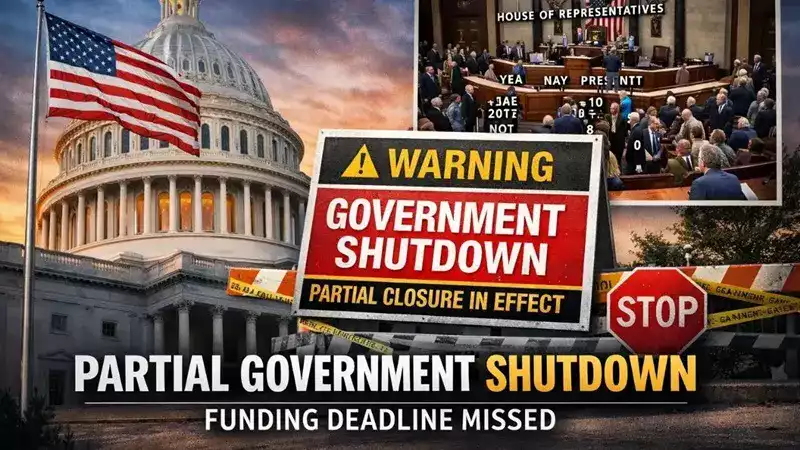

The partial government shutdown is now impact air travel at major U.S. airports, leading to long security lines and delays for travelers.
Table Of Content
Staff shortages at the Transportation Security Administration (TSA) are slowing airport operations. Thousands of federal workers are working without pay. This issue arises just as the busy spring break travel season begins. The disruption is raising concerns within the aviation industry.
Key Highlights
- Airport security lines have reached up to three hours at several U.S. airports.
- Around 50,000 TSA workers are working without pay during the shutdown.
- Major airports affected include Houston, Atlanta, Charlotte, and New Orleans.
- Airlines warn that delays could worsen as spring break travel increases.
- Passengers are advised to arrive three to five hours before their flights.
- Industry groups are urging lawmakers to resolve the funding dispute quickly.
How the Partial Government Shutdown Is Affecting Air Travel
The partial government shutdown air travel crisis is unfolding across multiple U.S. airports as federal funding disputes continue in Washington.
The shutdown, which began in mid-February due to disagreements over immigration policies and federal funding, has left key agencies facing financial issues. One of the hardest-hit areas is airport security.
Since the Department of Homeland Security (DHS) is impacted by the shutdown, TSA screeners, classified as essential workers, must continue their duties without pay.
As a result, absenteeism among TSA officers has grown, reducing the number of open security lanes at airports.
Reports show that airports such as Houston’s Hobby Airport and Atlanta’s Hartsfield-Jackson Atlanta International Airport have seen unusually long security lines. Some travelers waited more than three hours to clear checkpoints.
Passengers have reported missed flights, delayed departures, and crowded terminals as airports struggle to meet demand.
Background / Context
Government shutdowns have historically disrupted travel in the United States.
During shutdowns, essential federal employees, like TSA officers and air traffic controllers, must keep working, even though their pay is delayed until the government reopens.
This situation can lead to several operational challenges:
- Increased staff absences
- Reduced security screening capacity
- Longer passenger wait times
With the spring break travel season approaching, aviation groups estimate that 171 million Americans could travel between March and April, making the current situation especially challenging.
Expert Insights or Data
Industry leaders warn that the shutdown could have wider economic effects.
The airline industry group Airlines for America cautioned that staffing shortages could burden the aviation system if the shutdown goes on.
Travel experts also point out the financial strain on TSA workers.
Many TSA officers earn modest wages, and missing paychecks may lead some to take leave or look for other jobs, further compounding staffing shortages at security checkpoints.
A study from the U.S. Travel Association previously estimated that shutdown-related travel disruptions can cost the U.S. economy billions of dollars in lost spending and delays.
For deeper insights, read related coverage on latest business news
Impact / What Happens Next
If the shutdown continues, the aviation industry anticipates several potential outcomes:
Short-term impacts
- Longer airport security lines
- Flight delays and missed connections
- Increased stress for travelers
Long-term risks
- Reduced TSA staffing levels
- Airline schedule disruptions
- Economic losses in tourism and travel sectors
Travel experts recommend that passengers flying during the shutdown:
- Arrive at airports at least three hours early
- Check airline alerts before departure
- Prepare for possible delays
Conclusion
The impact of the partial government shutdown on air travel is becoming more apparent across U.S. airports. Long security lines and staffing shortages are disrupting travel during one of the busiest seasons of the year.
Unless lawmakers resolve the funding dispute soon, experts warn that disruptions could grow, affecting millions of travelers in the coming weeks.
Faq
The shutdown affects federal agencies like the TSA, which oversees airport security. Since TSA workers must work without pay during the shutdown, staffing shortages can happen. This leads to longer security lines, delays, and travel disruptions at airports.
Security lines are longer because many TSA workers are calling out or taking leave due to financial strain from missed paychecks. Fewer officers mean fewer screening lanes are open, which increases wait times for passengers.
Major airports with reported delays include Houston Hobby Airport, Hartsfield-Jackson Atlanta International Airport, Charlotte Douglas International Airport, and New Orleans International Airport.
Yes. Aviation safety systems are still in place because essential workers, like air traffic controllers and TSA officers, are required to work during shutdowns.
Travelers should arrive at least three hours before domestic flights. They should arrive even earlier during busy travel times, especially while the shutdown continues.
While most flights are still running, delays and missed connections may happen if airport security lines slow down passenger processing.
